
Why Lagos Youth Culture Is Changing
Lagos youth culture is changing fast. A new generation is reshaping how the city dresses, sounds and creates, pulling influence from music, fashion, nightlife and the internet. What once existed on the margins is becoming the new mainstream, as young Lagosians build a culture that feels increasingly their own.
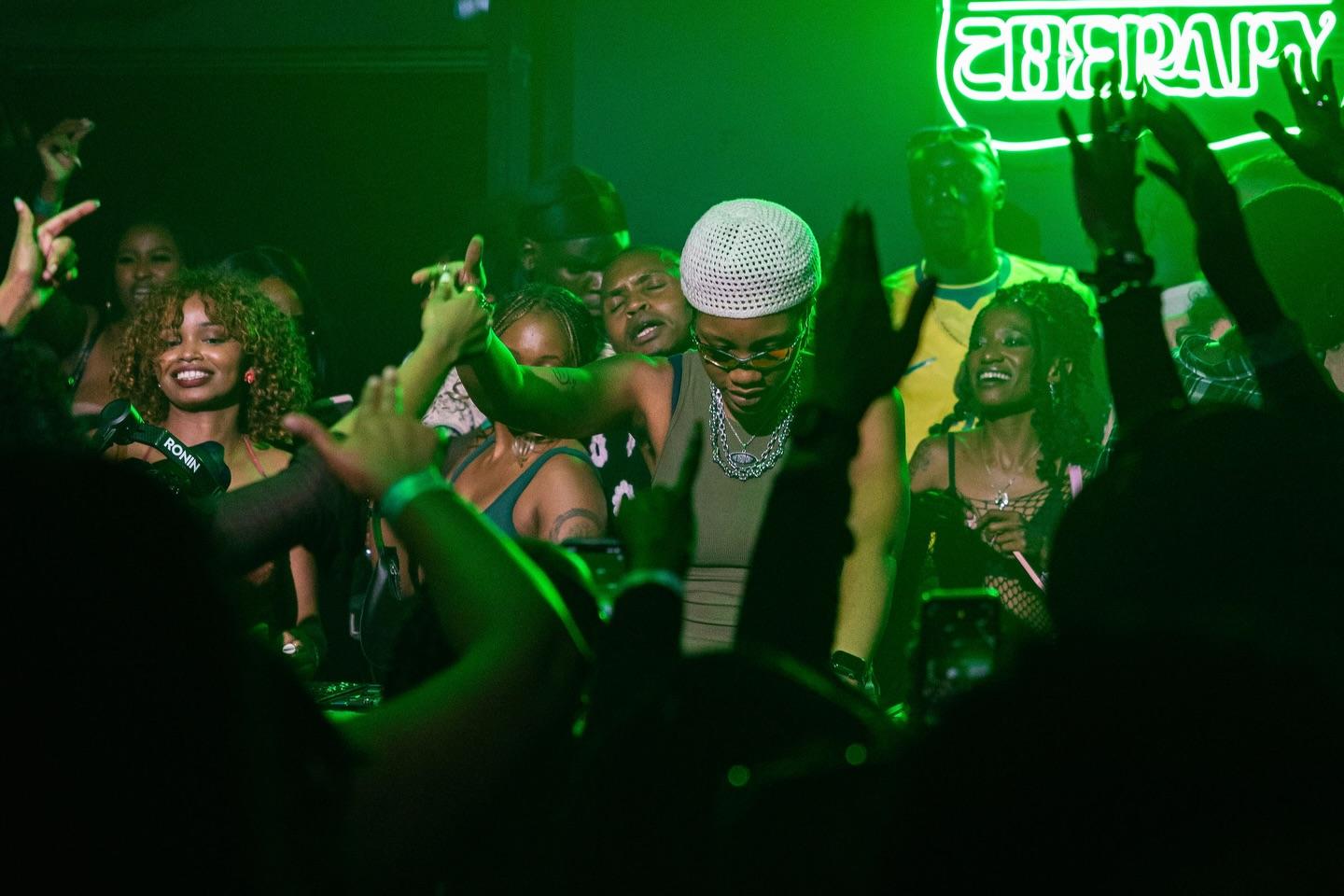
Lagos has always been loud.
Not only in the obvious sense — the traffic, generators, street vendors, clubs and endless movement — but culturally. The city constantly produces new ways of dressing, speaking, partying, making music and presenting yourself to the world.
But something about Lagos youth culture feels different now.
For a younger generation, culture is no longer something they simply inherit from the people before them. They are remixing it in real time. Music, fashion, nightlife, art, photography and internet culture are collapsing into one another, creating a version of Lagos that looks increasingly different from the city many of them grew up in.
The biggest change may be simple: young people are becoming more comfortable defining themselves.
The Internet Made Lagos Bigger
Growing up in Lagos once meant your immediate environment heavily shaped what you were exposed to.
Today, a teenager in Yaba can discover a Japanese designer in the morning, hear an underground South African artist in the afternoon, watch a London fashion archive at night and turn all three influences into something completely different by the weekend.
The internet has dramatically expanded the cultural vocabulary available to young Nigerians.
TikTok, Instagram, Pinterest, YouTube and X have made trends almost borderless. Young people no longer have to wait for magazines, television or major celebrities to tell them what is fashionable.
Everything is available at once.
That has produced a generation with references that can sometimes feel strangely disconnected from geography. Someone living in Lagos may dress like they belong to a subculture that originated thousands of kilometres away, while still speaking Nigerian slang, listening to local artists and incorporating references only another Lagosian would understand.
The result is not necessarily Westernisation.
It is remix culture.
Young Lagosians are taking global influences and filtering them through their own environment.
Music Is No Longer Just Afrobeats
Nigeria's global music success has made Afrobeats one of the country's most recognisable cultural exports.
But beneath the mainstream is a much more fragmented musical world.
Young listeners are increasingly comfortable moving between Afrobeats, rap, alternative music, electronic sounds, R&B, amapiano, punk influences and genres that do not always have convenient names.
That freedom is affecting everything around the music.
Artists do not only create songs anymore. They create aesthetics.
The haircut matters. The clothes matter. The cover art matters. The photography matters. The places they are seen matter.
Fans adopt pieces of those aesthetics and transform them again.
This is how scenes form.
An artist gains a small but devoted audience. That audience starts dressing a certain way. Designers begin creating clothes for them. Photographers document them. Parties give them somewhere to gather. Social media spreads the imagery.
Before long, something that once looked strange begins to look normal.
Fashion Has Become More Personal
For many young Lagosians, getting dressed is increasingly about identity rather than simply looking respectable.
The shift is visible in the popularity of oversized clothing, experimental styling, thrifted pieces, unconventional accessories, streetwear and the revival of older fashion references.
The expectation that everybody should look polished in the same way is weakening.
People are becoming more interested in looking distinctive.
A football jersey might be worn purely as fashion. A tie might appear with a tank top. Office trousers might be paired with sneakers and a graphic shirt. Vintage pieces can sit beside clothes from small Nigerian brands.
Sometimes the outfit looks chaotic.
That is part of the point.
Young people are learning that personal style does not always need permission.
And as Nigerian streetwear brands grow, consumers have more opportunities to wear clothing created specifically for the communities they belong to.
The Creative Scene Is Becoming the Social Scene
Another major shift is happening in where young people gather.
Fashion pop-ups, listening parties, exhibitions, underground shows, creative markets and brand events increasingly function as social spaces.
People attend because of the event itself, but they also attend to see and be seen.
A photographer meets a stylist. A musician meets a designer. A filmmaker meets an artist. Somebody takes a picture, posts it online and suddenly a small event becomes part of a larger cultural conversation.
These connections are helping Lagos develop an ecosystem where different creative industries constantly feed one another.
Fashion appears in music.
Music appears in film.
Film influences photography.
Photography builds the image of a brand.
The boundaries are disappearing.
For many young creatives, culture is becoming one interconnected industry.
Traditional Ideas of Success Are Being Challenged
There is also a deeper social change underneath all of this.
For previous generations, the path towards a respectable career often appeared relatively straightforward: become a doctor, lawyer, engineer, banker or enter another established profession.
That mindset has not disappeared.
But young Nigerians now have visible examples of people making careers from work that would once have been dismissed as unserious.
Content creators build businesses from their phones. Designers launch independent labels. Photographers travel internationally. DJs headline events. Stylists work with celebrities. Musicians build audiences without initially depending on major labels.
The internet has made alternative careers visible.
It has also made alternative lives visible.
That matters.
Once people see that another route exists, it becomes easier to imagine taking it themselves.
Being Different Has Become Valuable
There was a time when being noticeably different could make somebody an outsider.
In many creative circles today, being different is almost a form of currency.
The person with the strangest outfit might become the most photographed person at an event. An artist with an unconventional sound may attract a dedicated community precisely because they do not resemble mainstream performers.
The internet rewards recognisability.
If everybody looks, sounds and behaves the same, nobody stands out.
That has encouraged young creatives to push their identities further.
Of course, rebellion itself can eventually become another uniform. Once enough people adopt the same alternative aesthetic, what was once unusual becomes another trend.
But that cycle is exactly how culture evolves.
The underground creates something.
The mainstream absorbs it.
The underground moves again.
Lagos Is Becoming Both More Local and More Global
Perhaps the most interesting contradiction in modern Lagos youth culture is that young people are becoming more globally influenced while also becoming more interested in Nigerian identity.
Local slang appears on clothing.
Old Nigerian imagery returns in graphic design.
Traditional materials are placed inside contemporary silhouettes.
Nigerian childhood references become campaign concepts.
Artists sample sounds that remind listeners of previous generations.
The goal is not always to escape Nigeria culturally.
Increasingly, it is to redefine what Nigerian culture is allowed to look like.
That distinction matters.
There is a difference between copying another culture and having enough confidence to borrow from everywhere while still creating something identifiable as your own.
Lagos is gradually moving toward the latter.
The City Is Still the City
None of this means Lagos has suddenly become a creative paradise.
Young people still face limited opportunities, expensive production costs, unreliable infrastructure and a society that can be deeply resistant to lifestyles it considers unconventional.
Many creative careers remain financially unstable.
The freedom visible online can also exaggerate reality. A thriving Instagram scene does not necessarily mean everyone involved is making money.
But culture does not wait for perfect conditions.
Sometimes it grows precisely because conditions are imperfect.
Lagos has always forced people to improvise, adapt and create with whatever is available.
The difference now is that the world can see the results almost immediately.
And young Lagosians can see one another too.
That visibility is allowing small communities to become movements, niche aesthetics to become trends and previously ignored creatives to become cultural figures.
Lagos youth culture is changing because the generation shaping it has more references, more platforms and more permission to experiment than the generation before it.
They are not simply asking what Nigerian youth culture is supposed to look like.
They are deciding for themselves.